

Discover how mastering email communication can boost business efficiency, avoid common pitfalls, and ensure secure, respectful online interactions.
Turkey Revenge
The turkeys are pissed this Thanksgiving they are seeking revenge.
Germs Infest 60% of Americas Phones
60% of Americans sleep with their phones, harboring germs. Cleaning regularly with UV sanitizer or alcohol wipes can help keep your phone and bed germ-free.
Smartphone Sanitizing: A Practical Guide
Securely erase personal data from your old smartphone before recycling. Protect your identity from hackers—easy steps to follow.
Why Soft Skills Matter in Today’s Job Market
Boost your career with essential soft skills like communication, teamwork, and emotional intelligence. Learn why they’re crucial for workplace success.
The 10 Worst Passwords of 2018
 It is the end of 2018 and we have learned nothing from the massive Facebook and Marriott data leaks and numerous other hacks. California-based password-management company SplashData released its 2018 100 worst passwords based on 5 million leaked passwords on the internet.
Few people have switched things up. People continue to use the same hacked passwords time and time again. Topping the list of terrible passwords were “123456789” at No. 3, “password” at No. 2, and “123456” at No. 1. 2018 marked the fifth-straight year that “123456” and “password” kept their top two spots on the SlashData list.
1. 123456
2. password
3. 1 23456789
4. 12345678
5. 12345
6. 111111
7. 1234567
8. sunshine
9. qwerty
10. iloveyou
There are only 2 new entries in the 10 worst passwords, the highly unsecure “111111” at number 6 and “sunshine” at number 8.
SplashData estimates 10% of people have used at least one of the 25 worst passwords on this year’s list, with roughly 3% of internet users rely on the worst password, “123456.”
Don’t congratulate yourself yet if your passwords didn’t make SlpashData’s top 10 most used and least secure passwords of 2018. Check out the rest of SplashData’s list of 100 worst passwords. If your password made the worst 100 worst passwords list this year, you should change it.
rb-
Password advice has changed about as quickly as people’s passwords – NOT MUCH but worth repeating …..
 Use passphrases of twelve characters or more with mixed types of characters.
- Use different passphrases for each account. if a hacker gets access to one of your passwords, they will not be able to use it to use other sites and you only have to change that password instead of 50 of them,
- Use a password manager to generate and store your passwords and automatically log into websites.
- Set up two-factor authentication, especially when it’s generated on a phone app like Google Authenticator or on a small hardware device like Yubikey, can add an extra layer of security.
Imperva points out that 5% of all successful attacks are using brute force to guess a user or an administrator password. Brute force attacks do this with repeated login attempts using every possible letter, number, and character combination to guess a password.
Because most individuals have many accounts and many passwords, people tend to repeatedly use a few simple passwords. This leaves them exposed to brute force attacks. Email accounts protected by weak passwords are particularly valuable to hackers. They may be connected to additional accounts, and can also be used to restore passwords.
Attackers use specialized hardware to perform efficiently guess user passwords. Cryptocurrency mining rigs with graphics processing units (GPUs) and application-specific integrated circuits (ASICs) can be very effective in quick repetitive tasks like password guessing.
Imperva recommends a number of steps that an administrator can take to protect users from brute force password cracking:
- Lockout policy—you can lock accounts after several failed login attempts and then unlock it as the administrator.
- Progressive delays—you can lockout accounts for a limited amount of time after failed login attempts. Each attempt makes the delay longer.
- Captcha—tools like reCAPTCHA require users to complete simple tasks to log into a system. Users can easily complete these tasks while brute force tools cannot.
- Requiring strong passwords—you can force users to define long and complex passwords.
- Two-factor authentication—you can use multiple factors to authenticate identity and grant access to accounts.
Related articles
Ralph Bach has been in IT long enough to know better and has blogged from his Bach Seat about IT, careers, and anything else that catches his attention since 2005. You can follow him on LinkedIn, Facebook, and Twitter. Email the Bach Seat here.
A Batman Christmas

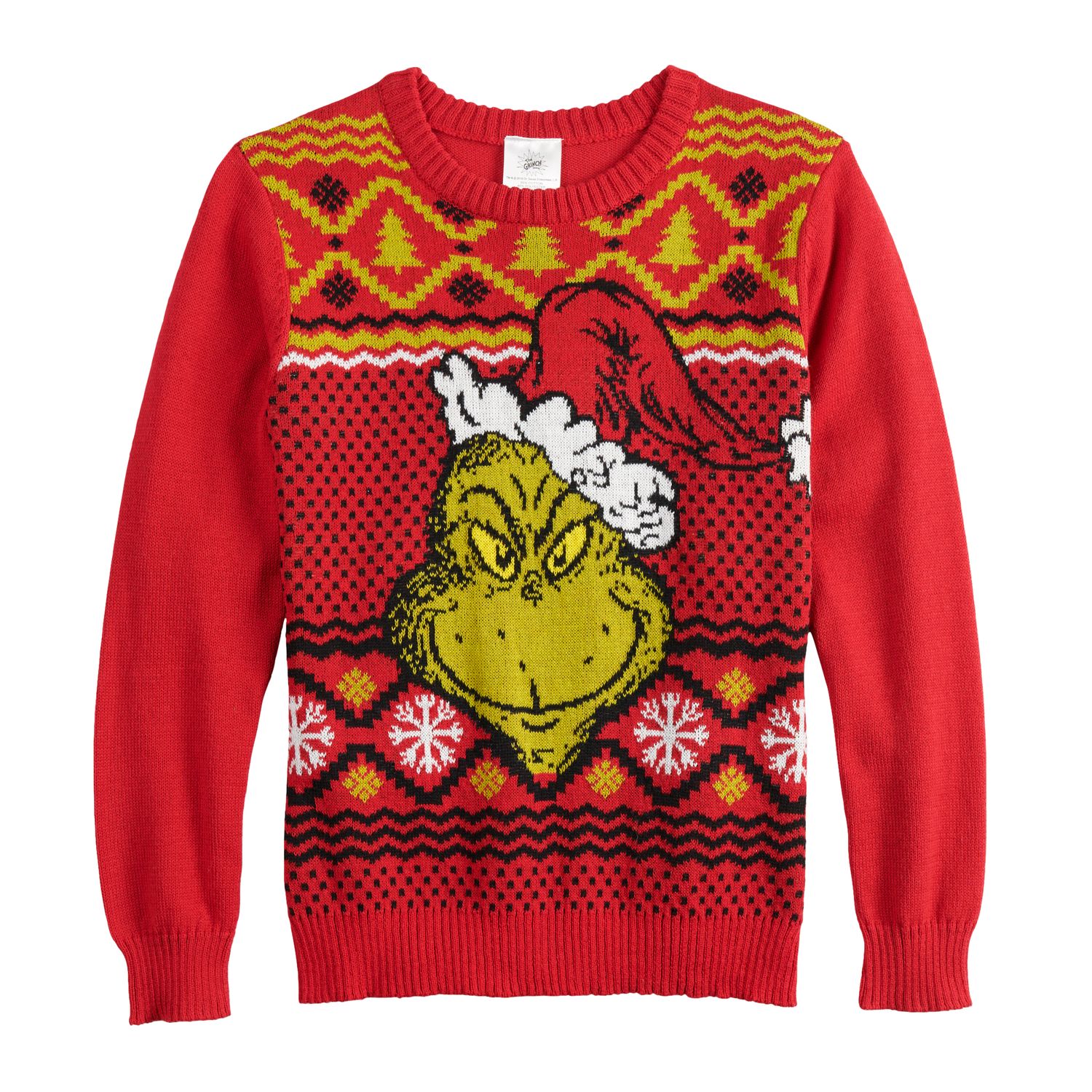
Do You Know the Grinch
 For many people, one of the holiday traditions is at least one viewing of 1966 animated classic How the Grinch Stole Christmas. The How the Grinch Stole Christmas TV show was adapted from Dr. Seuss’s equally famous children’s book by legendary animator Chuck Jones. Mental Floss dug deep into how the Grinch stole Christmas and here are some facts about the TV special that will surely make your heart grow three sizes this holiday season.
In the Army
 The Army started the Grinch. During World War II, Theodor “Dr. Seuss” Geisel joined the United States Army Air Forces and served in the Animation Department for the First Motion Picture Unit, a unit commanded by Frank Capra, tasked with creating various training and pro-war propaganda films. It was here that Major Geisel found himself working closely with Chuck Jones cartoon artist on an instructional cartoon called Private Snafu. Originally classified as for-military personnel-only, Private Snafu featured a bumbling protagonist who helped illustrate the dos and don’t’s of Army safety and security protocols.
The special almost didn’t happen. Television specials of the past, like How the Grinch Stole Christmas, had to rely on company sponsorship to get made. How the Grinch Stole Christmas struggled to find a benefactor. With storyboards in hand, Chuck Jones, creator of some of my favorite Looney Tunes, pitched the story to more than two dozen potential sponsors until he finally found his sponsor in an unlikely source: the Foundation for Commercial Banks. “I thought that was very odd because one of the great lines in there is that the Grinch says, ”‘Perhaps Christmas doesn’t come from a store,’” Mr. Jones said of the surprise endorsement. “I never thought of a banker endorsing that kind of a line. But they overlooked it, so we went ahead and made the picture.”
 Its budget was massive. Coming in at over $300,000, or $2.2 million in today’s dollars, the special’s budget was unheard of at the time for a 26-minute cartoon adaptation. It took 10 months to complete because as Mr. Jones explained the animators would create 3 drawings per foot for children’s shows, but the Grinch was drawn with 15 drawings per foot. The Grinch included 25,000 drawings and 200 backgrounds, “You have to do this for believability,” Mr. Jones wrote.
No credit for The famous voice actor and singer. Thurl Ravenscroft, best known for providing the voice of Kellogg’s Tony the Tiger, wasn’t given credit for his work in How the Grinch Stole Christmas. Because of this, most viewers wrongly assumed Boris Karloff, the narrator of the special also sang “You’re A Mean One Mr. Grinch.”
Max is a filler. Because reading the book out loud only takes about 12 minutes, Mr. Jones had the challenge of extending the story. In order to extend the show, Chuck Jones explained to TNT that he turned to Max the dog.
Mr. Jones would go on to name Max as his favorite character from the special, as he felt that he directly represented the audience.
The Grinch’s green color was inspired by a rental car. In the original book, the big green grump is illustrated as black and white, with hints of pink and red. Rumor has it that Mr. Jones was inspired to give the Grinch his iconic coloring after he rented a car that was painted an ugly shade of green.
 The Grinch was censored. Over the years, How the Grinch Stole Christmas was edited to shorten its running time (to allow for more commercials). However, one edit—which ran for several years—censored the line “You’re a rotter, Mr. Grinch” from the song “You’re a Mean One, Mr. Grinch.” Additionally, the shot in which the Grinch smiles creepily just before approaching the bed filled with young Whos was deemed inappropriate for certain networks and was removed.
The Grinch’s success led to re-do’s
Two less memorable Grinch tales were produced to exploit the popularity of the Christmas special. Halloween is Grinch Night aired in 1977 and tells the story of the Grinch making his way down to Whoville to scare all the Whos on Halloween. In 1982’s The Grinch Grinches The Cat in the Hat, the green guy finds himself wanting to renew his mean spirit by picking on the Cat in the Hat. In addition, there have been several re-makes:
- 2000’s dreary 2000 Jim Carey redo,
- 2010’s How the Grinch Stole Christmas! The Musical,
- 2018’s computer 3D computer-animated re-take.
Related articles
Ralph Bach has been in IT long enough to know better and has blogged from his Bach Seat about IT, careers, and anything else that catches his attention since 2005. You can follow him on LinkedIn, Facebook, and Twitter. Email the Bach Seat here.
Category: Holidays |
Tags: 2018, Boris Karloff, Christmas, Chuck Jones, Dr. Seuss, Frank Capra, Grinch, Movies, Snafu, Television
Please Take Lotus Notes
 In a move to free up some cash and make room for its $34 billion acquisition of Red Hat Inc. (RHT), IBM (IBM) is selling off its enterprise software business for $1.8 billion to HCL Technologies.
 HCL Technologies is global services company valued at $8 billion. India-based HCL operates out of 43 countries, serving the financial services, manufacturing, telecommunications, media, publishing, entertainment, retail, and other industries.
Lotus Notes
The sale includes most of IBM’s enterprise business, including Lotus Notes and Domino collaboration software, network management software Tivoli, and other titles. Lotus Notes was developed by Mitch Kapor in 1989 and was a pioneering enterprise software tool that swept the market with features such as email and collaboration workspaces, that we now take for granted.
 Lotus, founded in 1982, rose to fame in 1983 with the Lotus 1-2-3 spreadsheet, which drove the popularity of freshly minted IBM PC. IBM took over Lotus for the then astounding sum of $3.52 billion. IBM looked to the Lotus acquisition to change its white-shirt-and-tie culture to embrace the MTV age and the new Internet.
Lotus Notes and Domino ranked among the top client-server groupware and email systems in the 1990s, competing head-on against Microsoft Exchange. While Microsoft successfully migrated Exchange to Office 365 in the cloud, Notes and Domino largely missed the cloud era.
 Big Blue acquired Tivoli for $743 million in 1996. It ranked among the leading IT management software providers, competing against CA Technologies, BMC, and HP in the 1990s and early 2000s. Each of those companies stumbled in recent years — opening the door for ServiceNow to disrupt major portions of the market.
The IBM world-view
The HCL deal highlights IBM’s failure to navigate the shift from client-server to SaaS. Lotus Notes stayed a client-server system and lost business to Amazon Web Services (AWS) and Microsoft Azure and Google Cloud Platform.
 Now that the business has been lost, IBM is moving in a different direction. Older software like Lotus Notes and Domino don’t really play a role in the new IBM world-view. One IBM solution provider told CRN, “I can understand getting rid of Lotus Notes and Domino Microsoft Office 365 and Google Apps are killing the hell out of Lotus Notes. ”
In addition to Lotus Notes, Domino, and Tivoli, the IBM Software asset sale to HCL includes:
- IBM Appscan, a security-focused application for identifying and managing vulnerabilities in mission-critical applications;
- IBM BigFix endpoint management and security software;
- IBM Unica, a cloud-based enterprise marketing automation software; and
- IBM WebSphere Commerce, an omnichannel commerce platform for B2C and B2B organizations.
rb-
While I am the PM on our move off of Notes to SaaS products like O365, every once in a while I find myself saying that Notes worked well. But then I remember that it is overly complex and proprietary. The client software is huge and bloated and lacks a simple client.
Related articles
Ralph Bach has been in IT long enough to know better and has blogged from his Bach Seat about IT, careers, and anything else that catches his attention since 2005. You can follow him on LinkedIn, Facebook, and Twitter. Email the Bach Seat here.
Rollo the Red-Nosed Reindeer
 Santa’s reindeer, Dasher, Dancer, Prancer, and Vixen have been around since 1823 when they first appeared in Clement Moore’s ‘Twas the Night Before Christmas. But Santa’s most famous reindeer, Rudolph didn’t even exist until 1939. As shocking as that is, here are some more secrets about Rudolph the red-nosed reindeer.
 Rudolph worked for Montgomery Ward In 1939, execs for the now-defunct Montgomery Ward department store decided they needed a character for the freebie coloring books they were handing out to kids who visited Santa. That character ended up being Rudolph, who was an immediate hit with the kiddies. Montgomery Ward gave out 2.4 million copies of the Rudolph booklet in the first year alone. In 1948 Fleischer Studios, the home of Betty Boop, Popeye and Superman created a Rudolph cartoon as an advert for Montgomery Ward.
He could have been Rollo. Rudolph might have had another name. Robert L. May, a copywriter for Montgomery Ward’s mail-order catalog division, who wrote the story considered a number of names. Santa’s new reindeer might have been named Rollo, Reginald, Romeo, or Rodney until they settled on Rudolph.
Rudolph nearly lost his red nose. At first, Rudolph  used a different method to guide Santa’s sleigh. Instead of having a red, glowing nose that cuts through the fog, Mr. May considered giving Rudolph large, headlight-like eyes that would light the way. After much consideration, he decided mean kids would be more likely to make fun of a red nose than huge eyes.
He has a son named Robbie. The BBC developed three cartoons based on Rudolph’s offspring, but the name of Robbie’s famous dad is never actually mentioned. The plotline tells us that the villain of the series, Blitzen, can’t stand to hear Rudolph’s name. In reality, it’s because the BBC couldn’t get permission to use it (or didn’t want to pay to use it). Fox Family ran the show in the U.S. for a few years in the early 2000s with re-dubbed voices, including Ben Stiller as Robbie, Hugh Grant as Blitzen, Britney Spears as Donner, and Brad Garrett as Prancer.
Robert May’s brother-in-law, Johnny Marks who wrote the lyrics for some of the most beloved holiday songs including, “Rockin’ Around the Christmas Tree,” “Run, Rudolph, Run,” and “Have a Holly Jolly Christmas,” also wrote the lyrics and melody for “Rudolph the Red-Nosed Reindeer.”
 The song was recorded 10 years after the character was invented. Bing Crosby turned down the song and Gene Autry nearly passed on the tune, but his wife urged him to give it a shot. “Rudolph the Red-Nosed Reindeer” became number 1 on the Billboard pop singles chart in 1949. Since Mr. Autry recorded it, the tune has sold more than two million copies in its first Christmas, with over 150 million copies sold to date.
The Ventures recorded their version of Rudolph The Red-Nosed Reindeer in 1965 – In which they included a very noticeable riff from the Beatles.
rb-
 The 1964 Rankin/Bass stop-motion TV special is the longest-running holiday special ever. However this year Rudolph has come under attack, led by the Huffington Post. What the hater miss is the Jewish experience baked into the story. In the Rudolph story, the author turned a mark of antisemitism into a point of pride. Mr. May and company made the stereotypical Jewish nose noble at Christmas-time.
Rudolph’s red nose first has other reindeer laughing, calling “him names,” never letting “poor Rudolph play in any reindeer games.” “Then one foggy Christmas Eve” Rudolph with his “nose so bright” helps guide Santa’s “sleigh tonight.”
Author May explained,
Today children all over the world read and hear about the little deer who started out in life as a loser, just as I did. But they learn that when he gave himself for others, his handicap became the very means through which he received happiness.” Thus, Rudolph’s mass marketing and altruistic message, not just Rudolph’s gift-delivering-heroics, “will go down in history.
Related articles
Ralph Bach has been in IT long enough to know better and has blogged from his Bach Seat about IT, careers, and anything else that catches his attention since 2005. You can follow him on LinkedIn, Facebook, and Twitter. Email the Bach Seat here.
Category: Holidays |
Tags: 2018, Betty Boop, Britney Spears, Cartoon, Christmas, Fleischer Studios, Gene Autry, Popeye, Reindeer, Robert May, Rudolph, Superman, Television