A New York start-up called NeverWare is trying to break the Microsoft (MSFT) upgrade loop. Each time a new version of Windows is released, many computer users find that their hardware is suddenly outdated. NeverWare is targeting cash-strapped schools that cannot afford to upgrade to the latest hardware with each major Microsoft software release. NeverWare is offering a possible solution a virtualization server that lets even decade-old PCs upgrade to the latest Windows 7 operating system reports MIT’s Technology Review.
 Technology Review says that the NeverWare server, called the JuiceBox a100, does the hard work of running the latest operating systems for many aging computers on the same network. To users of those old computers, it will feel as if the PCs are running the latest version of Windows, when in fact they are accessing it over the network. Their typing and mouse commands are sent to the software on the server, and the imagery for their display is sent back. This is called virtualization.
Once connected to a JuiceBox virtualization server, a PC doesn’t even need a hard drive, or any local software at all according to the article. NeverWare’s founder, Jonathan Hefter, says a 10-year-old desktop computer running Windows 98 would work just fine. He’s targeting the U.S. education market and institutions in the developing world with the technology. “Schools can’t afford to upgrade PCs, and developing countries can’t afford PCs, so if we can use the power of the cloud, we can move to a more efficient model of computing, Mr. Hefter says. Several New Jersey schools. are testing JuiceBox servers to power networks of desktops in two
 Another company, NComputing, also uses servers to offer “virtual desktops” to multiple users and supplies its technology to some schools around the world. Mr. Hefter says in the article that, NComputing’s approach requires a new device that links a user’s keyboard, mouse, and monitor to a distant server over the Web. He claims that one NeverWare JuiceBox is larger than an NComputing device, but then it only takes one JuiceBox to “upgrade” a network of tens of computers.
Joyojeet Pal, professor of computer science and engineering at the University of Washington, thinks NeverWare’s approach has potential. “What this project seems to offer is an alternative to an online operating system like Google’s (GOOG) Chrome OS,” Mr. Pal says. Google’s approach requires users to use Web versions of software packages, rather than providing access to traditional software. However, Mr. Pal says, the cost of maintaining an outdated machine could still be considerable due to the need for repairs and labor, for example.
rb-
Mr. Hefter is right with his comparison of US education and third wold education. The way the Republicans are attacking teachers and ravaging budgets the third-world nations will soon be better off.
Thin clients and virtual desktops have been around for a long time. It may stick this time because the economics are right and the technology is adequate.
What do you think?
Has the time of virtual desktops finally arrived?
Is it because of the technology? The economics?
Related articles
- Windows TPC Turns PCs Into Thin Clients (informationweek.com)
Ralph Bach has been in IT long enough to know better and has blogged from his Bach Seat about IT, careers, and anything else that catches his attention since 2005. You can follow him on LinkedIn, Facebook, and Twitter. Email the Bach Seat here.
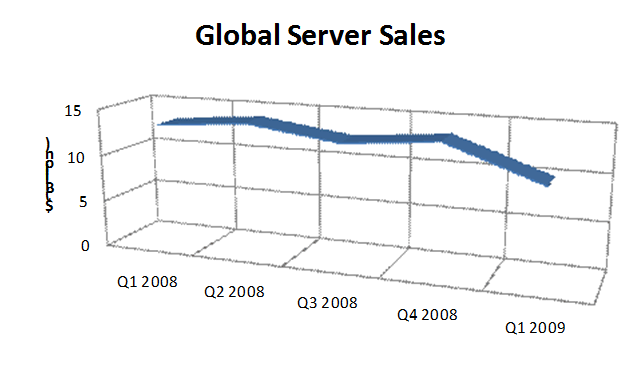
 Like most of us (except the bankers) global sales of servers have taken a beating since the first quarter of 2008. Server sales have declined by over $3 billion due to the