
Tag Archive for Intel

Tablet Notes

Tablet computer ownership will lead the industry over the coming 12 months as all-in-one devices continue to grow in popularity according to the CEA.

Windows 8 Tablets in November

Windows 8 Tablets in NovemberExpect the first wave of Windows 8 tablets to land in retail stores in November, according to CNET. A secret source deep within Intel (INTC) says the Intel-based Microsoft (MSFT) Windows 8 tablets will use Intel’s upcoming Clover Trail Atom chip. DailyWirless says that Clover Trail is Intel’s first dual-core Atom design based on its 32-nanometer process technology.

The author says the tablets will fall into two basic sizes: pure 10-inch tablets and hybrid 11-inch designs with physical keyboards. Windows 8, like Windows 7 before it, will be powered by chips from Intel and AMD (AMD) and will be able to run older, so-called “legacy” applications.

A separate release from Microsoft, Windows RT, will land on devices powered by ARM (ARMH) chip suppliers NVidia (NVDA), Qualcomm (QCOM), and Texas Instruments (TXN). RT will not run older Windows applications.

Chinese Tablet PCs Peel Away at Apple

Chinese Tablet PCs Peel Away at AppleApple Inc may find it harder to keep market share in China because homegrown tablet PC brands will win over more customers says a report on China Daily.com. Sun Peilin with Analysys International, told China Daily, Apple’s (AAPL) market share will shrink to about 70 percent, “Chinese tablet PC makers are trying to form a stronger echelon behind Apple by taking over the market share that belonged to small copycat manufacturers.

Apple’s iPad and iPad 2 took 78.3 percent of the market share in China in Q1 2012, distantly followed by Samsung’s (005930) 5.1% and ErenEben’s 4.5% according to the article. AI’s data indicates tablet PC sales in China are expected to break 4.5 million units. Companies including Lenovo (LNVGY), Acer (ACEIY) and home appliance giant Haier Group, are releasing their own tablet PCs.

Sun from Analysys states in the blog the biggest obstacle Chinese brands face is how to come up with a different marketing angle against Apple, to avoid head-on competition with the iPad. “There are two separate markets for tablets: You can either go entertainment or business. The iPad is a big competitor in terms of entertainment, so Chinese companies should be different from iPad,” Sun suggested. Some Chinese companies have already differentiated their tablets. Beijing ErenEben Information Technology Co, a business tablet PC maker, won a government contract to provide tablets to the police department in the Guangxi Zhuang autonomous region.

According to Fang Liyong, COO of ErenEben, the company sold nearly 150,000 units of its first two generations of products in 2010, making it the biggest homegrown tablet PC brand by sales volume. “We are now selling nearly 30,000 units every month in 2011,” he said.

With a touchscreen developed by Japanese graphics-tablets maker Wacom Co Ltd, the ErenEben tablets were designed to offer an experience similar to writing on real paper. The COO boosts, “ErenEben has great growth potential, because China’s tablet market is so big, and Apple cannot take it all.”

iPad Suit

iPad SuitMohan’s Custom Tailors of New York is taking the boring and basic out of the word “suit” by designing a new and improved version for the modern man. According to their website, as men are dressing up and going out to dinner dates, museum galleries, and lounges in fine style, Mohan’s is creating contemporary and handsome designs to fit their needs. Mohan’s has introduced the fashion of the future with their new tech offerings, including pockets for your Research In Motion (RIMM) Blackberry, Apple (AAPL) iPod, iScribe, Bluetooth, and more. Most recently, they have revealed the first-ever iPad pocket in menswear, creating a fashion rush for “techies” around the world.

iPad Bacon Case

iPad Bacon CaseAt Antje Schmitt’s storefront at Etsy, the famous handcrafted Bacon Case for the Apple (AAPL) iPad 3 is now available. The Bacon Case is also available for older iPads, MacBooks, Netbooks, and Notebooks.

ZD.net – “The undisputed king of the weird category however, is the iPad bacon case ($59, pictured), which I’m ordering immediately.”

Gizmodo – “It’s $59, but who cares? Bacon iPad cases are what money was invented for, people. Well, that, and both actual bacon and actual iPads.”

Gearfuse – “Bacon and Apple products go together like peas and carrots. Or lamb and tuna fish. They’re both the perfect byproducts of their respective categories. Pimp your iPad with pork with the custom-made Bacon iPad case. It might not be actual bacon, but it’s realistic design is enough to make you wish you had a side of eggs to go with your balanced breakfast of pork and tablet.”

Clueful Scans Your iOS Apps For Privacy Behavior

Clueful by BitdefenderSecurity firm Bitdefender has introduced Clueful, an app that scans your Apple (AAPL) iOS apps lets you see what information other applications installed on your iDevice might have access to. Once downloaded and installed (iTunes), the $3.99 app scans your iPad 3, iPhone 4s or other iOS Apple products to see what’s installed and puts it in a list that can be filtered based on the various kinds of behavior. This includes things like:

  • Apps that can track location
  • Apps that can read the address book
  • Apps that might drain battery
  • Apps that use iPhone’s unique ID
  • Apps that display ads
  • Apps that gather analytics

These behaviors are listed in the results and explained on each app’s detail page. However, Clueful doesn’t log how often these behaviors happen. Clueful also notes if your data is encrypted, and if app makers anonymize you as a user, CNET News.Com reported.

Besides scanning what you have downloaded, the article explains that the software is designed to let you research what kinds of information an application wants to use before you buy it from the App Store. However, the author says, ” this appeared to be a work in progress, it is slow and unable to pick up a handful of big name games and apps.”

Bitdefender maintains all the data behind the privacy analysis, and users can ask to have apps that are not a part of that system analyzed. CNet states that Clueful comes some three months after Apple came after fire for the fourth time over how iOS and apps log and send user information to third parties.


Ralph Bach has been in IT long enough to know better and has blogged from his Bach Seat about IT, careers, and anything else that catches his attention since 2005. You can follow him on LinkedInFacebook, and Twitter. Email the Bach Seat here.

VGA, DVI to Wane Over Next Five Years

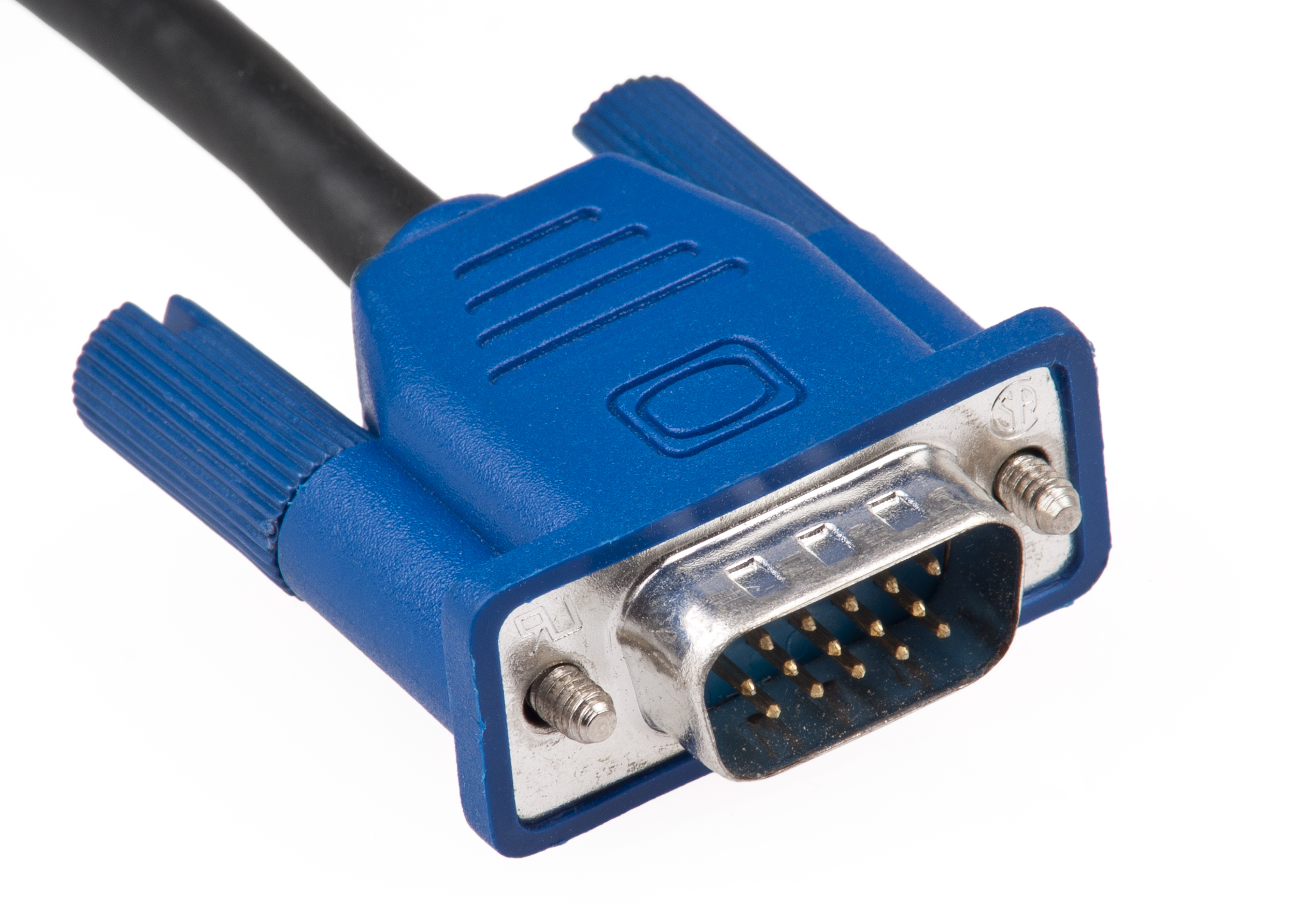
VGA, DVI to Wane Over Next Five YearsThe venerable Video Graphics Array (VGA) port and it upstart cousin digital-visual interface (DVI) port will become extinct over the next five years. So says Brian O’Rourke, research director at NPD In-Stat in a recent report published on PCWorld. NPD In-Stat points out how new laptops today come with HDMI and DisplayPort for interfacing with HDTVs, monitors and projectors.

VGA VGAhas no upgrade path, and DVI has only gone through one minor upgrade cycle; in comparison, HDMI and DisplayPort are continuously being upgraded, according to O’Rourke. More importantly, chipmakers such Intel (INTC) and AMD (AMD) are phrasing out chipset support for VGA by 2015, while AMD has announced it will phase out chipset support for DVI by 2015. NPD In-Stat is forecasting shipments of devices with DVI, HDMI, and DisplayPort to pass 2 billion by 2015.

VGA’s long history stretching back to its introduction in 1986 makes it difficult to envision a world without it. Still, there have been ample signs of its impending obsolescence, such as the introduction of DVI and HDMI ports in mid-to-high-end displays in recent years.

HDMI portOf course, its forced retirement will mean that VGA will no longer be available as a fallback option for auditoriums and function rooms around the world. The presence of interface adapters can help, though businesses will probably need to give greater consideration to the presence of multiple interface support when acquiring new display devices or projectors.

rb-

OF course, the move to HDMI is being driven by big media so they can implement their draconian vision of DRM, HDCP.


Ralph Bach has been in IT long enough to know better and has blogged from his Bach Seat about IT, careers, and anything else that catches his attention since 2005. You can follow him on LinkedInFacebook, and Twitter. Email the Bach Seat here.
186Gbps Transfer Sets Real-World Speed Record

186Gbps Transfer Sets a Real-World Fiber Speed RecordResearchers have set a new world record for data transfer. The new record was set at the SuperComputing 2011 (SC11) conference in Seattle, Washington. PhysOrg.com reports the international team set the speed record when they transferred 186 gigabits per second (Gbps) of data across 134 miles of an optical network for 11 hours.

Commercially available circuits

SuperComputing 2011The record-setting connection used a commercially available 100 Gbps circuit. The circuit was set up by Canada’s Advanced Research and Innovation Network (CANARIE) and BCNET, a non-profit, shared IT services organization. PhysOrg says the team was able to reach transfer rates of 98 Gbps between the University of Victoria Computing Center in Victoria, BC, and the Washington State Convention Center in Seattle. With a simultaneous data rate of 88 Gbps in the opposite direction, the team reached a sustained two-way data rate of 186 Gbps between two data centers. This broke the team’s previous peak-rate record of 119 Gbps set in 2009.

California Institute of Technology (Caltech) led the team of high-energy physicists, computer scientists, and network engineers from the University of Victoria, the University of Michigan, the European Center for Nuclear Research (CERN), and other partners.

transport large quantities of data across global networks of optical fibersAccording to PhysOrg, the achievement will help set up new ways to transport increasingly large quantities of data. More and more data traverse continents and oceans via global networks of optical fibers. The next generation of network technology needs new methods to transfer rates of 40 and 100 Gbps—that will be built in the next couple of years.

Our group and its partners are showing how massive amounts of data will be handled and transported in the future,” Harvey Newman, professor of physics and head of the high-energy physics (HEP) team told PhysOrg. “Having these tools in our hands allows us to engage in realizable visions others do not have.”

“The 100 Gbps demonstration at SC11 is pushing the limits of network technology by showing that it is possible to transfer petascale particle physics data in a matter of hours to anywhere around the world,” adds Randall Sobie, a research scientist at the Institute of Particle Physics in Canada and team member told PhysOrg.

The speed record equipment was not sexy

memorex guyExtremeTech points out that the achievement is quite significant. It is significant because the scientists used a commercially available 100 Gbps link and not “over private networks under laboratory/testbed conditions.” The equipment was not particularly sexy either. ExtremeTech lists Dell (DELL) servers with Intel (INTC) Sandy Bridge-based server motherboards with PCIe 2.0 and 3.0 solid-state drives. They used 10 and 40 Gbps LAN connections, and Force10 Z9000 and Brocade (BRCD) MLXe-4 switch-routers. The gear was able to achieve a disk to disk transfer rate of 60 Gbps, around 7.5 gigabytes per second. The 186 Gbps record was a memory-to-memory transfer between the servers. The max per-computer speed was 35 Gbps. Tested.com calculates that 4.42 petabytes traveled across the network during the transfer test.

rb-

So why does anyone need to move two million gigabytes per day? This is fast enough to transfer nearly 100,000 full Blu-ray disks—each with a complete movie and all the extras—in a day.

CERN needs faster transfer rates. CERN needs to move the huge amounts of data coming from the Large Hadron Collider (LHC). The LHC has already generated more than 100 petabytes of data. The data is processed, distributed, and analyzed at 300 computing and storage facilities at laboratories and universities around the world. Scientists believe the data volume will rise a thousand-fold as physicists crank up the collision rates and energies at the LHC in their attempt to cause the end of the world (Not)

FierceTelecom predicts that service providers will deploy 100Gig when the price of 100Gig is double the price of 40Gig. They believe that will take place in 2013.

This massive amount of bandwidth running on commodity Internet pipes with available hardware seems to spit in the eye of current bandwidth providers who can’t seem to provide a 10 Mbps circuit reliably.

Related articles


Ralph Bach has been in IT long enough to know better and has blogged from his Bach Seat about IT, careers, and anything else that catches his attention since 2005. You can follow him on LinkedInFacebook, and Twitter. Email the Bach Seat here.

Data Centers To Go Wireless

Data Centers To Go Wireless

MIT’s Technology Review reports researchers from IBM (IBM), Intel (INTC), and the University of California, Santa Barbara have come up with a way to improve data transmission in data centers. Heather Zheng, associate professor of computer science at UCSB who led the research says wireless is the answer to the in-rack cabling mess usually found in data centers. In their paper (PDF), the researchers say that transmitting data wirelessly within a data center would be simpler than rewiring data for tech titans like Google (GOOG), Facebook, or Twitter.

Line-of-sight connections

WiFi radio wavesThe earlier challenge for multi-gigabit wireless in the data center was it required a line-of-sight connection to be useful. Achieving the required data center speed could not happen in the maze of metal racks, HVAC ducts, and electrical conduits that make up most data centers.

TR reports that the researcher’s solution is to bounce 60-gigahertz Wi-Fi signals off the ceiling, which could boost data transmission speeds by 30 percent. Stacey Higginbotham at GigaOm points out that this could result in data transfers up to 500 Gigabits per second. She says current Ethernet cables in data centers are generally 1, 10, or maybe 40 gigabits per second.

60-gigahertz Wi-Fi for servers

Data center ceiling WiFiMs. Zheng and colleagues used 60-gigahertz Wi-Fi, which has a bandwidth in the gigabits-per-second range and was developed for high-definition wireless communications according to TR. However, it has its limitations, says Ms. Zheng. To maximize the bandwidth and reduce interference between signals, it needs to use 3D beamforming to focus the beams in a direct line of sight between endpoints. “Any obstacle larger than 2.5 millimeters can block the signal,” she says in the TR article.

One way to prevent the antennas from blocking each other would be to allow them to communicate only with their immediate neighbors, creating a type of mesh network. But that would further complicate efforts to route the data to the proper destinations, Professor Zheng told TR. Bouncing the beams off the ceiling directly to their targets not only ensures direct point-to-point communication between antennas but also reduces the chances that any two beams will cross and cause interference. “That’s very important when you have a high density of signals,” she says.

Flat metal plates placed on the ceiling offer near-perfect reflection. “You also need an absorber material on the rack to make sure the signal doesn’t bounce back up,” says Ms. Zheng.

Wireless can add 0.5 terabytes per second

Data centerAccording to Technology Review, the UCSB team worked with Lei Yang from Intel Labs in Oregon and Weile Zhang at Jiao Tong University in Xi’an, China, to simulate a 160-rack data center to see how the system might work. “Our simulation shows that wireless can add 0.5 terabytes per second,” she says.

IBM is also looking into using wireless technology in data centers, Scott Reynolds, a researcher at IBM’s T.J. Watson Research Center in Yorktown Heights, NY, who has been developing 60-gigahertz systems told TR. “These data centers are just choked with cables,” he says. “And so every time you want to reconfigure one it’s very labor-intensive and expensive.” But one problem with turning to wireless transmission, he adds, is that “you need to have hundreds of these wireless data links operating in a data center to be useful.” Since 60-gigahertz Wi-Fi has only four data channels, it’s important to configure the beams so they don’t interfere with each other.

Mark Thiele, the EVP of data center technology at Switch CommunicationsSuperNAP data center, told GigaOm that the research is worth following as low-latency networking inside the data center can be a bottleneck today for applications that range from financial trading to trying to move gigantic data sets around.

TR reports Ms. Zheng and her colleagues are now working on building a prototype data center to put their solution into practice.

rb-

Cable mess under a raised floorHaving just done a small data center cleanup, the idea is appealing. We pulled out 2 generations of cabling, IBM Type 1, and a bunch of Cat 3 multi-pair out from under the deck.

Ms. Higginbotham says the choice of 60 GHz for the data center is a smart move. Intel is pushing 60GHz for consumer use, under the WiGig brand (I wrote about WiGig in 2010 here). This means the chips would be cheap.

Some of the possible security issues raised by running Wi-Fi in the data center are tempered by using the 60Ghz range. She says if you are worried about someone standing outside the data center trying to eavesdrop on the data you are transmitting the 60Ghz, signals deteriorate rapidly.

Of course, change is hard and data center guys are going to have to learn wireless and top-of-rack switches would have to get radio cards installed. The Wi-Fi reflective panels would have to be installed on the ceiling of the data center and the servers would need a signal-absorbing surface so the Wi-Fi signals don’t continually bounce around the data center.

Just if you are confused about WiGig, Wi-Fi, and IEEE, EETimes says, “WiGig forged a deal with the Wi-Fi Alliance so its 60 GHz approach can be certified as a future generation of Wi-Fi. The group has aligned its technical approach with the existing IEEE 802.11ad standards effort on 60 GHz.”

Now if only they could do wireless electricity……..

Related articles


Ralph Bach has been in IT long enough to know better and has blogged from his Bach Seat about IT, careers, and anything else that catches his attention since 2005. You can follow him on LinkedInFacebook, and Twitter. Email the Bach Seat here.

Too Late for Cisco to Take on Apple?

Too Late for Cisco to Take on Apple?Chronically under-performing Cisco is finally getting into the iPad tablet market. Cisco (CSCO) will be releasing Cius in July. Technology Review reports that Cisco’s Cius, is bulkier than the iPad, and has a smaller screen (7-inches wide, compared to the iPad’s 9.7). But it packs a number of tricks designed to woo business users.

Cisco logoTested.com says the Cius can connect to a Cisco phone network to port calls from a desk number to the tablet in order to make a user’s desk number mobile. This will enable a person to make and receive voice and video calls anywhere. The tablet features HD quality cameras front and back and can be used with a Bluetooth headset for more private calling.

The tablet can also be used as a desktop videoconferencing device when docked on a special desktop phone, and can smoothly switch between a WiFi a cellular network connection. The Cius can be docked to serve as a videoconferencing device. The dock supports a keyboard and mouse, so the Cius really can serve as a little computer, “It can replace my desktop operating system,” says Tom Puorro, senior director for Cisco’s collaboration technologies told Technology Review.

Tested.com says the tablet runs Google‘s (GOOG) Android 2.2 Froyo on an Intel (INTC) Z650 1.6GHz Atom chip and weighs 1.5 pounds despite its small 7” screen. Tested.com speculates that Cisco has heavily modified the open-source Android to support business-centric features like multi-person videoconferencing and virtual desktop software.

Engadget has a video demo of the product here.

The fully skinned Android tablet seems like a relic of 2010 thanks to the arrival of Honeycomb, a version of Android actually built for tablets–which the Cius isn’t running. Tested.com says Cisco plans to upgrade the tablet to Android Ice Cream Sandwich eventually, but for now, it’s slumming around with version 2.2 (Froyo). Cisco probably spent too much time developing its custom skin and software to upgrade to Android version 2.3 (Gingerbread) or version 3.0 (Honeycomb).

Cisu runs on AndroidCisco has also created its own app store, AppHQ, that has only apps deemed stable and secure by Cisco and segregated it from the Android app market. This gives the IT department greater control over what a Cius user can do. IT managers can shut down access to the Android app market to protect a company from malicious apps according to Technology Review. Companies can even create their own app store within AppHQ and limit employees to certain applications, or apps built in-house.

Cisco has demonstrated a Cius virtual desktop that runs in the cloud and makes use of a dedicated chip in the tablet that encrypts all its data says Technology Review

A Wi-Fi-only version of the tablet will be available worldwide from July 31 at an estimated price of $750. Cisco will sell it along with related services and infrastructure, so the cost to businesses will vary, and could be as low as $650. AT&T and Verizon will each offer versions for their 3G and 4G networks this fall.

rb-

I wrote about the Cius here and don’t think it is an Apple Killer. Cisco will give its big partners a deal, but Cius also depends on an existing Cisco telephony infrastructure. I don’t see the Cius fitting in the Cisco product line-up since they jettisoned the Flip and are reportedly shopping Linksys and WebEx. The built-in virtual desktop looks pretty cool, though.

What do you think?

Can the Cisco Cius knock off the Apple iPad?

Does the Cius make sense in the non-consumer Cisco?

Related articles


Ralph Bach has been in IT long enough to know better and has blogged from his Bach Seat about IT, careers, and anything else that catches his attention since 2005. You can follow him on LinkedInFacebook, and Twitter. Email the Bach Seat here.